Gas‑to‑power (GtP) projects need to treat environmental authorisation and water use licensing as integrated components of a single permitting exercise, not as isolated approvals to be collected after the plant design has been settled. Recent litigation shows that the law examines the project as a functioning whole: its electricity purpose, gas supply chain, water source, cooling configuration, waste streams, associated infrastructure, climate consequences and effects on communities are connected. These connections must be understood at the beginning, as the project will otherwise risk securing one approval while carrying factual and procedural defects that later cause another approval, or the project itself, to fail.
This paper considers what Eskom, and comparable developers must do differently to obtain and retain an environmental authorisation under the National Environmental Management Act 107 of 1998 (NEMA) and the necessary water use entitlements under the National Water Act 36 of 1998 (NWA). It places the Supreme Court of Appeal's decision in South Durban Community Environmental Alliance v Minister of Forestry, Fisheries and Environmental Affairs at the centre of the analysis, while using the Trustees of the Groundwork Trust v Acting Director General: Department of Water and Sanitation (hereafter Khanyisa decision) and the Shell litigation in Sustaining the Wild Coast to show why meaningful participation, relevant considerations and an integrated evidential record must be treated as substantive project work rather than procedural formality. The short answer is that authorisation must become an early, integrated and design-shaping workstream, not a late legal confirmation of decisions already taken. It also considers why the judgment matters for energy security, industrial development, and investment. The paper concludes that authorisation must become an early, and integrated workstream, while the public meaning of development must be established with affected communities rather than asserted for them.
The constitutional framework
Section 24, NEMA and the NWA
Section 24 of the Constitution frames the enquiry. It protects the right to an environment that is not harmful to health or wellbeing and requires reasonable measures that prevent pollution, promote conservation and secure ecologically sustainable development while justifiable economic and social development is pursued. The provision does not demand an abstract choice between energy security and environmental protection. It demands proof that ecological limits, economic development and social need have been reconciled in the circumstances of the project. Natural gas may perform a transitional and dispatchable role while the electricity system expands renewable capacity, but that potential role is a matter to be demonstrated through project specific evidence rather than assumed from the label of transition fuel.
NEMA gives practical content to this balance through integrated environmental management. Its principles place people and their needs at the forefront, require a risk averse and cautious approach, insist that cumulative impacts and alternatives be considered, and require interested and affected parties to participate. The NWA then performs a related but distinct function. Water is held in public trust, and every section 21 use must be lawfully authorised and assessed against the Reserve, resource protection, other users and the public interest. While the strategic importance of a project is relevant, it does not convert a proposed power station into an automatic entitlement to water.
The practical consequence is that the EIA and Water Use Licence Application (WULA) should begin together and rely on one controlled engineering baseline. The EIA considers the wider environmental consequences of the listed activities. The WULA determines whether abstraction, storage, watercourse alteration, discharge, disposal of waste or heated process water, and dewatering may lawfully occur. They remain separate statutory decisions, but a contradiction between them is evidence that the project itself has not been adequately defined.
The effect of South Durban on a GtP application
In South Durban, Eskom's proposed 3 000 MW CCGT at Richards Bay had received an environmental authorisation. The Supreme Court of Appeal nevertheless set the authorisation aside. The Court did not hold that gas power is prohibited. It held that the decision was reached through an inadequate process: public participation had not been made genuinely accessible to affected communities; climate and cumulative impacts had not been sufficiently assessed; the analysis of alternatives, need and desirability was deficient; and material impacts associated with the broader gas chain were left for later processes. A fresh application was required because later approvals could not repair defects in the foundational environmental decision.
The judgment is important because policy support for gas cannot replace project specific proof. Government may regard dispatchable gas generation as part of the energy transition and as a contributor to economic growth. However, an IRP or procurement allocation does not answer whether this plant, at this site, using this water source and fuel pathway, is needed and desirable after reasonable alternatives and cumulative effects have been assessed. The Constitution remains supreme, and the court's role is to test whether the authorised decision was lawful, rational and based on all relevant considerations. Eskom should therefore translate system need into evidence: the anticipated capacity and flexibility contribution, the duration of operation, the fuel pathway, credible alternatives and the project's consistency with a progressively lower-carbon system. Policy is relevant context, not an exemption from evidence.
Public participation, water and the full project life cycle
Lessons from the Shell and Khanyisa litigation.
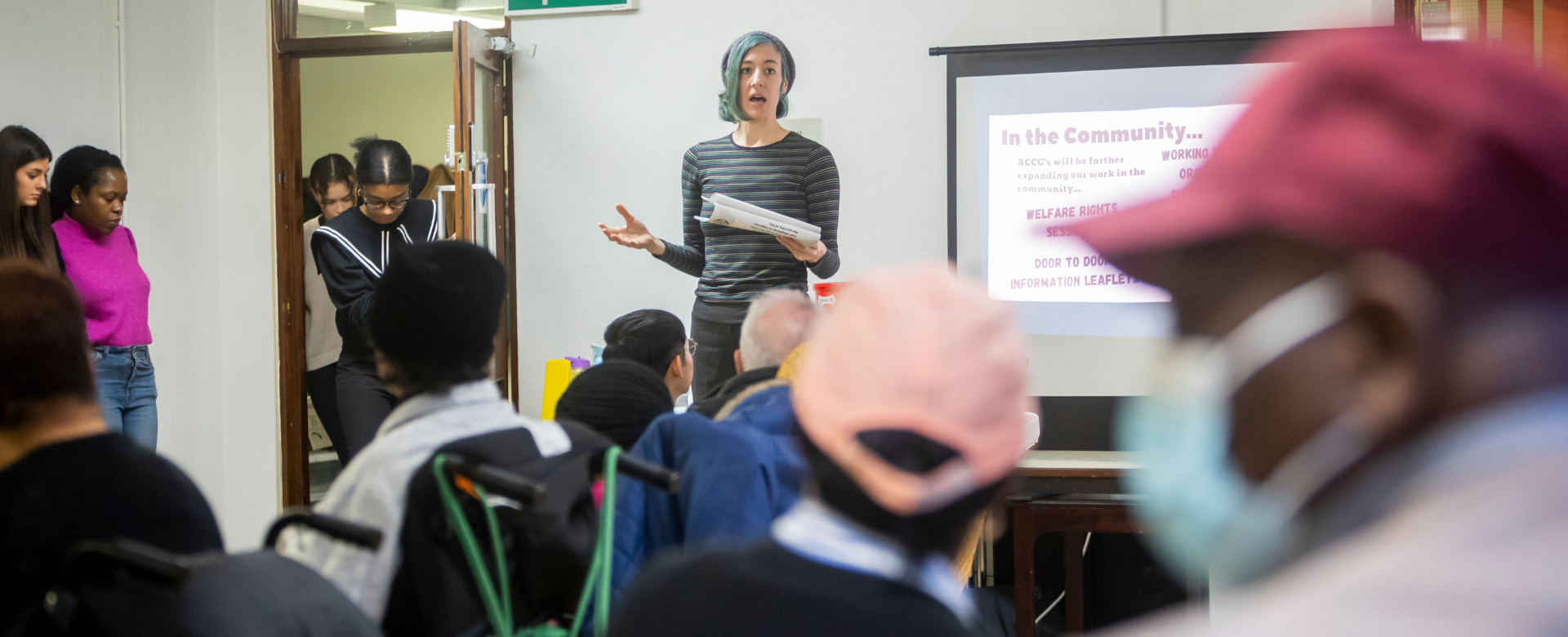
The Shell litigation provides a current warning against treating consultation as notice alone. In Sustaining the Wild Coast, the process failed to engage communities through methods capable of reaching them and failed to appreciate customary rights, livelihoods and cultural and spiritual relationships with the coast. The SCA's treatment of the expenditure already committed is equally important: sunk cost could not legalise defective consultation. For GtP, the participation plan should be designed around the social and linguistic character of the affected area, including traditional leadership, municipal structures, local water users, vulnerable groups and communities affected by pipelines or associated infrastructure. Information must be understandable, material concerns must receive reasoned answers, and design changes must be taken back to affected people where they alter the impact profile.
Khanyisa brings the same principle into water licensing. The Water Tribunal held that participation undertaken for an earlier environmental process could not substitute for consultation on a materially revised WULA containing additional water uses and specialist information. Technical efficiency and water reuse were relevant, but they did not end the enquiry into beneficial use in the public interest when climate change, water scarcity and the long life of the thermal project remained material. This is the direct link between the EIA and WULA: the same water balance may demonstrate resource demand and climate resilience in the EIA, while establishing the precise section 21 uses and section 27 merits in the WULA. Yet each authority must still receive a procedurally complete application and a participation record directed to the decision it is required to make.
Integrated EIA and water authorisation strategy
The recommended strategy is to establish an integrated approvals workstream before front-end engineering design is frozen. It should be governed by a single authorisation lead, a common project description and a controlled assumptions register. The EIA and WULA may draw from the same engineering, climate, hydrological and social evidence, but each must retain its own compliance record, authority engagements, notices, comments and responses. Integration prevents inconsistent facts, while separate records prevent the developer from assuming that participation or proof assembled for one statutory decision automatically satisfies the other.
The key controls are early definition, assessment of the full life cycle, and a litigation ready administrative record. These controls are explained in more detail below.
The first control is early definition. Before front end engineering is frozen, the developer should confirm the site, water source, annual and peak demand, cooling technology, storage, effluent treatment, stormwater system, discharge points, pipelines and every wetland or watercourse crossing. These facts should be translated into a section 21 matrix linking each component to its authorisation route, coordinates, volumes, specialist evidence and proposed mitigationA project may trigger several waters uses under Section 21 of the National Water Act:
- Section 21(a): Direct abstraction
- Section 21(b): Water storage
- Sections 21(c) and (i): Crossings and wetland disturbance
- Sections 21(f), (g), and (h): Contaminated or heated water discharge
- Section 21(j): Construction dewatering
While a municipal supply arrangement may alter the abstraction analysis, it does not authorise the project's other required water uses.

The second control is to assess the full life cycle. The climate analysis should include operational and upstream emissions, gas sourcing and transport, water and energy interactions, foreseeable expansion and the consequences of drought and climate change for reliable operation. The alternatives enquiry should test site, scale, cooling and treatment systems, water sources, renewable or storage combinations and the no go option. This is not an invitation to make the process unnecessarily broad. It is a requirement to ensure that material impacts are not fragmented and postponed until the authority considering the first approval no longer has the full picture.
The final control is a litigation ready administrative record. A single approvals register should record the studies, assumptions, stakeholder commitments and dependencies shared by the EIA and WULA. A relevant considerations register should show how each material issue was investigated and why it changed, or did not change, the design. Independent review of the climate, hydrological and water balance evidence should occur before submission. The project programme and budget must allow for accessible consultation, seasonal studies, authority requests, specialist work, design iteration and potential challenge. Statutory processing targets are planning assumptions, not guaranteed completion dates. The official application fee is therefore not the true cost of authorisation. The material cost lies in producing evidence capable of surviving objection, appeal and judicial review.
Energy development and economic implications
The implications extend beyond Eskom's power station. South Africa's projected gas supply constraints, the role assigned to gas in electricity planning and interest in domestic resources such as the Orange Basin make regulatory clarity increasingly important for both generation and upstream development. Industry commentary has similarly emphasised the connection between domestic offshore gas, energy security and the transition. That urgency supports early coordination and clear policy; it cannot dilute NEMA or the NWA. The durable policy response is to align energy planning, environmental assessment and water planning so that developers know the evidence required before capital is committed, while authorities retain the project-specific discretion required by section 24.
Why the Judgment matters for energy security and development
South Africa's energy transition takes place against a continuing need for secure and flexible electricity. Wind and solar can supply increasing shares of the energy mix, but their variability creates a separate need for capacity that can respond when renewable output falls. GtP may meet part of that need because CCGT and open-cycle plant (OCGT) can provide dispatchable generation. Research has shown that that natural gas could form part of the medium-term balancing requirement, provided that the country resolves gas storage, supply and infrastructure constraints. Gas should therefore be assessed as one component of the transition rather than as an alternative to it.
The economic relevance extends beyond the electricity produced by a single plant. Reliable power supports industrial output, investment and employment, while an anchor GtP can support terminal, storage and pipeline infrastructure that may also serve industrial users. Eskom had described the proposed Richards GtP station as a foundation customer for LNG infrastructure and as a source of flexible capacity needed to support renewable integration and reduce reliance on diesel. The case for the project is therefore capable of including energy security and industrialisation. However, those benefits must be quantified and tested against the project's climate, water, affordability and lock in risks. The description of gas as a transition fuel cannot do that evidential work on its own.
The financial and investment implications of the judgement
The immediate financial consequence of South Durban is not a judicially calculated loss of jobs or GDP. The judgment set aside the environmental authorisation and required a fresh application. This exposes the project to the cost of repeating specialist studies and participation, revising the design, extending development schedules and carrying capital while the authorisation and commercial arrangements remain uncertain. A delay to 3 000 MW of dispatchable capacity also carries a wider opportunity cost in an economy in which electricity shortages have constrained production and investment. The South African Reserve Bank has estimated that load shedding reduced annual growth by between 0.7 and 3.2 percentage points under its models, with estimates from other institutions ranging from 0.4 to 4.2 percentage points. These national estimates cannot be presented as the loss caused by the South Durban judgment, but they demonstrate why delay in credible generation projects matters economically.
The same distinction applies to employment. A proposed project may promise construction work, operational jobs and activity in a host industrial zone, but the record identified in South Durban does not quantify the jobs or GDP that the judgment caused the country to lose. The defensible approach is to disclose the direct expenditure already incurred, the jobs supported during development, the local procurement that is contractually committed and the economic value of the electricity that the plant would supply. It should then compare those benefits with the cost of delay, alternative projects and the environmental and social risks. This would replace broad claims about national loss with an auditable economic scenario.
Recent reporting has attempted to place a figure on the economic opportunity at stake. BusinessTech reported an EnerGeo Alliance estimate that development of South Africa's offshore oil and gas sector could add almost R23 billion to annual GDP and support more than 20 000 direct, indirect and induced jobs. The figure is relevant to the scale of the policy choice, but its limits must remain clear. The underlying estimate concerns the potential full-life-cycle contribution of the Block 11B/12B project off the southern coast. It is not a calculation of losses caused by the Wild Coast judgment and does not establish that the Shell exploration right would have produced the same outcome.
Legal certainty remains central to that assessment. Investors require a stable account of the authorisations, information and consultation that the law demands. However, certainty does not mean that an approval which rests on an incomplete assessment should survive judicial review. Sustaining the Wild Coast shows the financial stakes clearly. The company respondents had spent approximately R1.1 billion, and the Constitutional Court accepted that this expenditure formed part of the remedial enquiry. The majority nevertheless held that financial investment could not outweigh grave constitutional violations or the need to vindicate the rights of affected communities. The implication for investors is that lawful process creates certainty. Capital committed before meaningful consultation and a complete assessment carries avoidable legal risk.
Policy Implications and recommendations
The first recommendation is to align energy planning, environmental authorisation and water licensing around a single project definition. The competent authorities should agree an early evidence protocol covering the plant, terminal, pipeline, fuel source, water balance, cumulative emissions and alternatives. Each authority must retain its statutory independence, but the factual basis should not change from one application to the next.
The second recommendation is to require a development statement that can be tested. The statement should quantify project expenditure, direct and indirect employment, local procurement, industrial demand, electricity-system value and fiscal effects. It should also identify who receives these benefits, which communities carry the burdens and how the project responds to their priorities. Where benefits depend on later infrastructure or a future production right, the document should state that dependency rather than presenting the benefit as certain.
The third recommendation is to make legal certainty a design objective. Government should publish clear guidance on the climate, cumulative-impact, alternatives, water and participation evidence expected from gas projects. Developers should complete consultation before irreversible expenditure, maintain a record showing how concerns influenced the design and use stage-gates that prevent financing and procurement from outrunning the approvals on which they depend.
The final recommendation is to report the cost of both action and delay transparently. Project specific job and GDP effects should be modelled as scenarios and published with their assumptions. The same assessment should disclose the cost of reapplication, redesign, stranded development expenditure, prolonged electricity constraints and alternatives forgone. A court judgment should not be assigned losses that the evidence cannot establish. Its economic lesson is that weak authorisation work can destroy value, while a lawful and participatory process protects communities, improves project design and makes investment more bankable.
What this means for future gas-to-power projects
South Durban confirms that South Africa cannot separate the urgency of the energy transition from the legality of the decisions through which it is implemented. Gas to power may provide flexible capacity, support industrial activity and anchor regional gas infrastructure. Those benefits matter in an electricity-constrained economy, but they do not prove the need and desirability of a particular plant or excuse an incomplete assessment. The economic consequences of delay should be measured carefully, and national estimates of the cost of load-shedding should not be misrepresented as project-specific losses. Sustaining the Wild Coast further shows that sunk investment does not displace constitutional rights and that development cannot be defined without the people who bear its local consequences. The durable response is therefore not less scrutiny, but earlier and better coordinated scrutiny: a complete project definition, integrated EIA and WULA evidence, meaningful participation, an auditable development case and staged investment that does not outrun legal authority. This approach gives gas a defensible place in the transition where the evidence supports it, while protecting water, climate and community interests and creating the legal certainty on which long-term investment depends.
15 September 2026 Renewable Energy Oil & Gas Policy & Regulatory Affairs Energy Transition

Dr. Davies Tsikayi
Energy Specialist

Paayal Kanjee Govind
Integrated Energy Practice Lead

Melisizwe Xulu
Analyst