Meron runs a growing logistics business in Addis Ababa. She banks where her parents did...the same branch, the same queue, the same handful of products. When she wants to raise capital to buy trucks, her choices are a bank loan or her own savings. There is no bond she can issue, no equity she can sell, no fund looking to back a company like hers. Her bank keeps her deposits safe, but it cannot offer her access to the deeper capital market that a business of her size needs to grow. Millions of Ethiopians, savers, borrowers and business owners like Meron, live some version of this story.
For decades, that story had a simple explanation: Ethiopia’s financial sector was closed, to foreign investors and to new competition. That has now changed. Today the birr floats, interest rates are market-determined, and foreign investors can own up to 49% of an existing Ethiopian bank or set up a wholly owned subsidiary. Banking groups across Africa have expressed interest. Yet almost two years after the opening, not one foreign bank has opened its doors. This matters because capital is finite, and it moves to markets that offer opportunity, protection and a credible path to returns. Ethiopia is therefore competing for it.
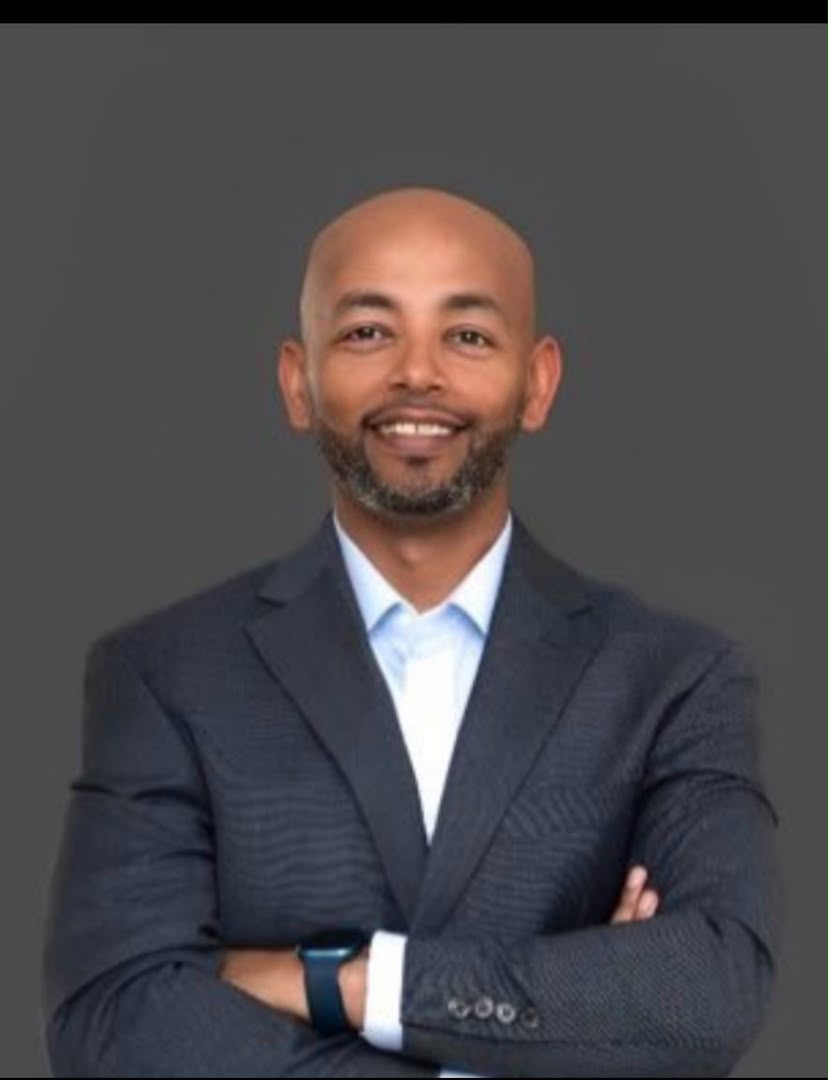
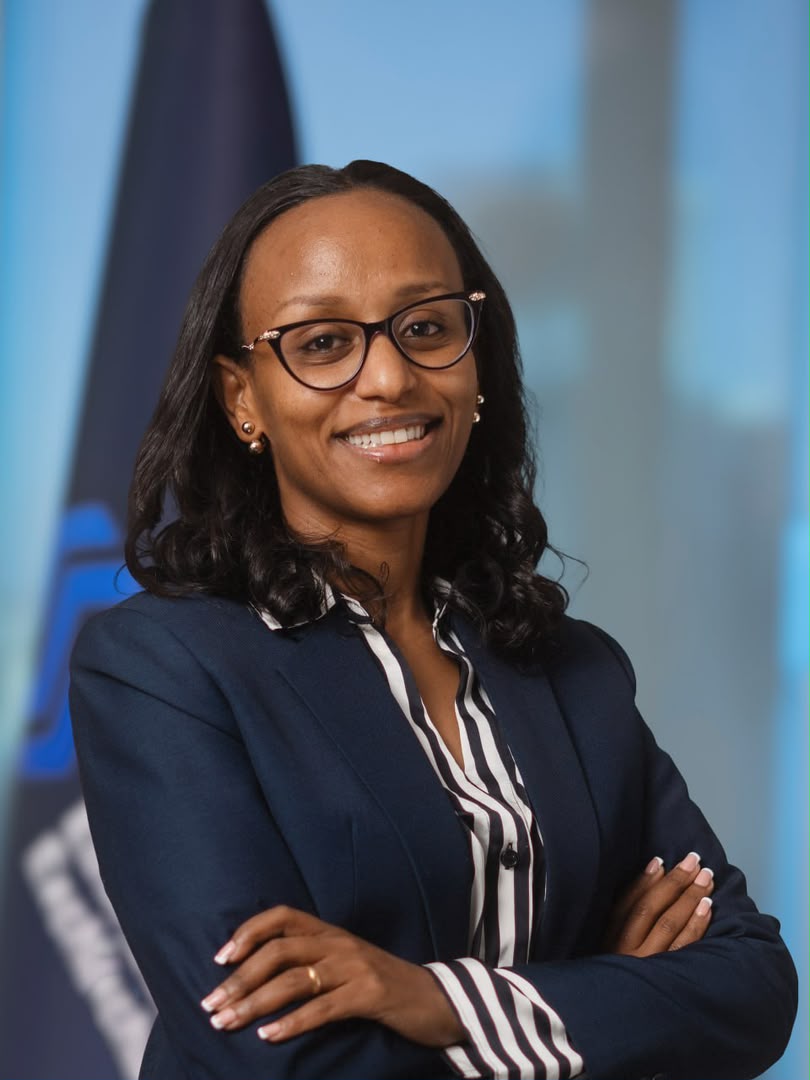
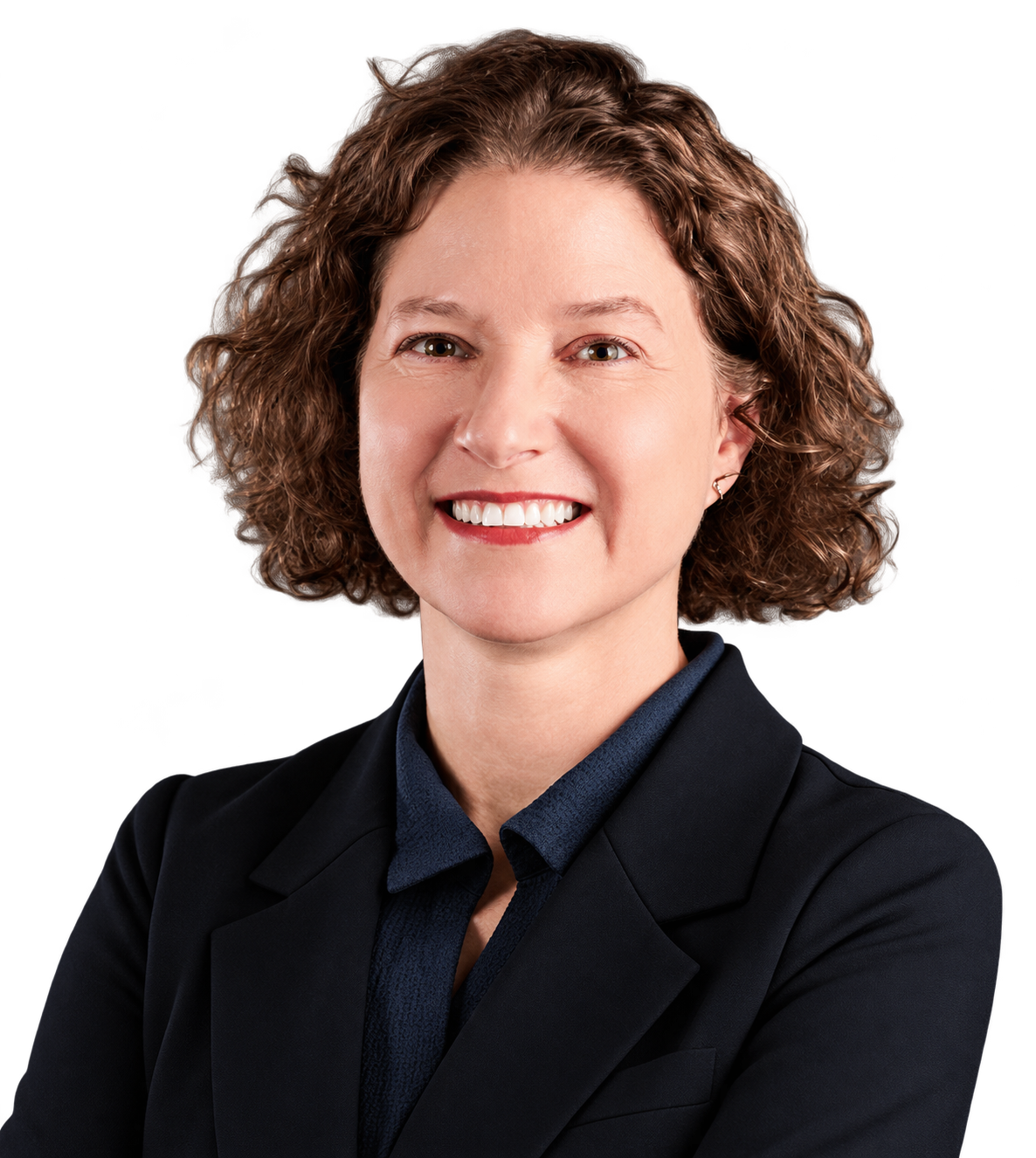
Our view is simple. Ethiopia does not need more permission, it needs a first deal. A first mover will commit when it can see a credible path to compete, scale and generate sustainable returns within a predictable operating environment, supported by market infrastructure and institutions that are ready to put capital to work. On 28 October, AIA and Precise Consult hosted a webinar to explore what turns that interest into commitment. Yodit Kassa, Chief Executive Officer of the Ethiopian Securities Exchange (ESX), and Rachel Freeman, Chief Growth Officer of GoTyme Bank, joined Hasnayn Ebrahim, CEO and Managing Partner of AIA, on a panel moderated by Henok Assefa, Managing Partner of Precise Consult. What follows is our read on what it will take, and what would change for businesses like Meron’s.
Watch the webinar
Beyond Banking Ethiopia | Webinar Recording
Watch the full Beyond Banking Ethiopia webinar, recorded on 28 October 2026. Click here to watch in full screen.
1. The capital is already in the banks
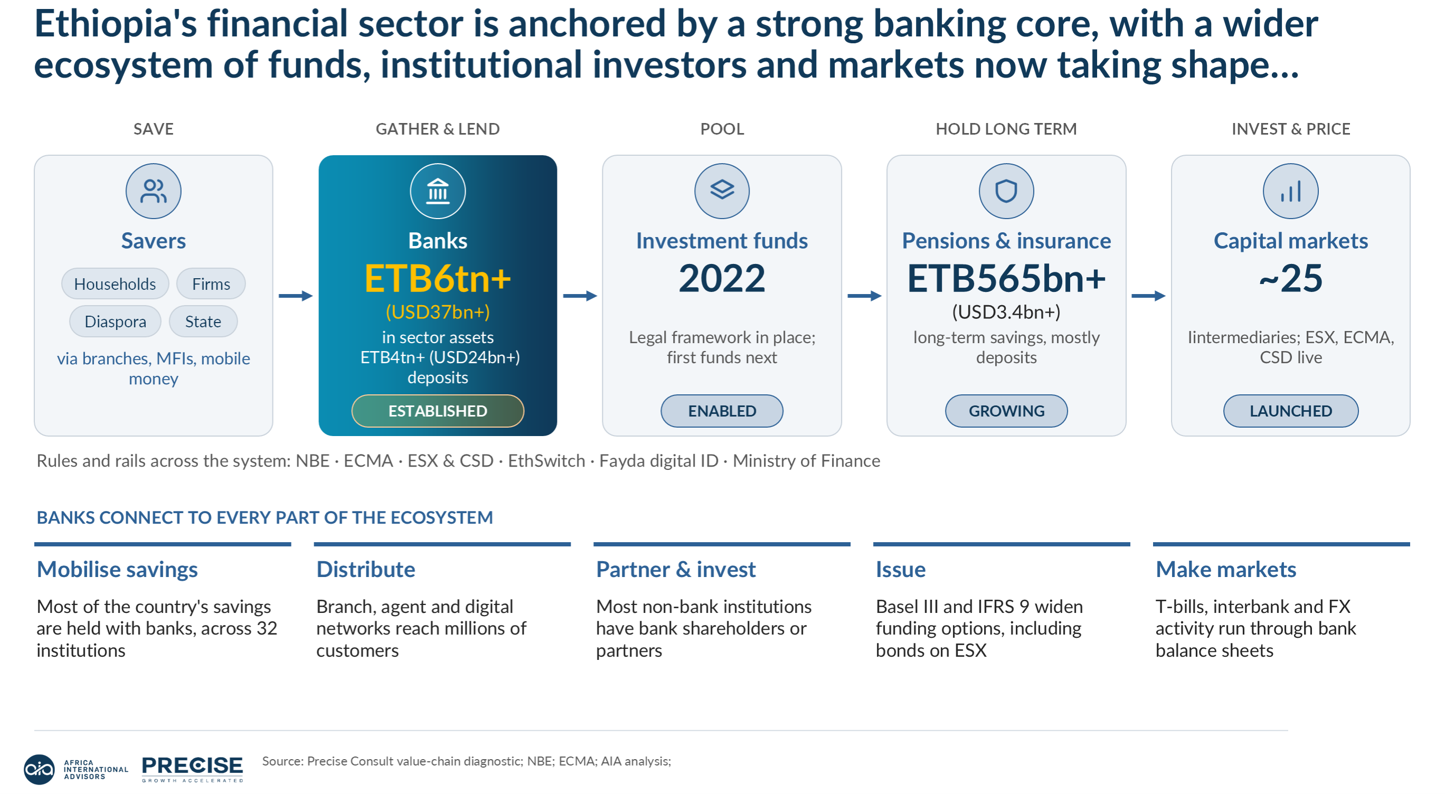
Ethiopia does not start from scarcity. The financial sector holds more than ETB6 trillion (about USD37 billion) in assets. Pension funds and insurers hold a further ETB565 billion in long-term savings, but most of it sits in bank deposits because few long-term instruments exist yet. Banks sit at the centre of the system. They mobilise savings, distribute financial products, own or partner with most non-bank institutions and are natural early issuers of securities. Furthermore, they act as the main market players in Treasury bills, interbank lending and foreign exchange (Exhibit 1).
It follows that developing investment and capital markets means building on the banking system, not bypassing it. As Ms Kassa put it: "It's not beyond, it's within the banking sector ecosystem."
Exhibit 1: A strong banking core, with a wider ecosystem of funds, investors and markets taking shape
2. The architecture is built. Depth is what's missing
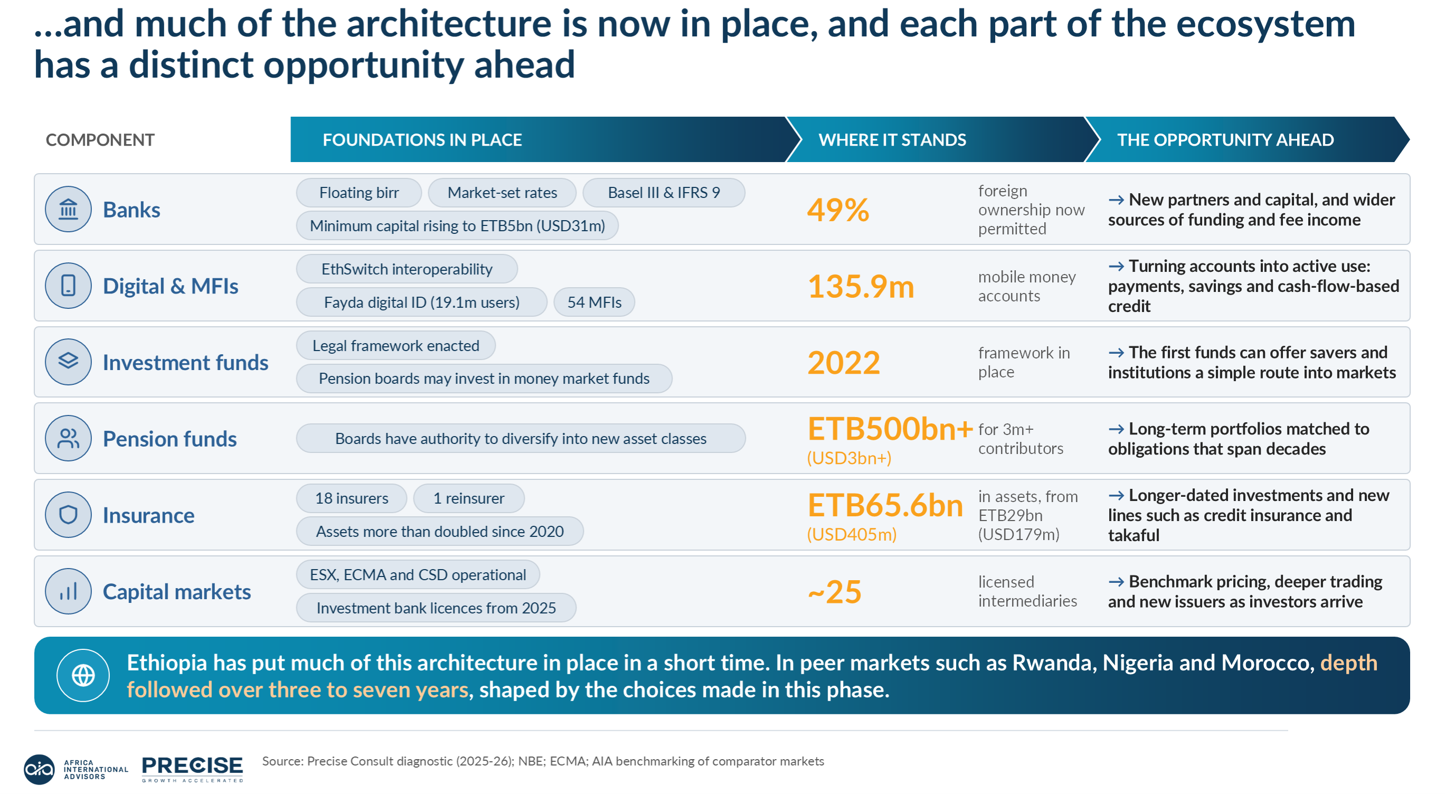
In a short time, Ethiopia has built most of what a modern financial system needs. Banks have adopted Basel III capital standards and IFRS 9 accounting rules, and the minimum capital requirement for banks rises to ETB5 billion by the end of 2026. EthSwitch makes payments interoperable across providers, and Fayda has given 19 million people a digital ID. Investment funds have had a legal framework since 2022, pension boards may diversify their portfolios, and the exchange, regulator and central securities depository are all operating. As a result, each part of the system now has a distinct opportunity ahead (Exhibit 2).
The ESX shows how quickly things can move. It formally launched in January 2025 without a single broker and started with the short end of the market. Its interbank money market, which opened in November 2024, has since passed ETB4 trillion in trades. Government T-bills are listed, but secondary trading has yet to develop. Seven equities trade today, six of them banks and the exchange aims to reach 15 listed securities by June 2027. However, Ms Kassa was candid that the market "hasn't really delivered the value yet" and that "a bit of unlearning and learning" is under way. When asked whether banks could raise equity or subordinated capital on the ESX, she said the answer is always “yes” first, and the “how” follows. In practice, the listing rules, the regulatory-capital treatment of such issues and the required approvals from the National Bank of Ethiopia (NBE) and the Ethiopian Capital Market Authority (ECMA) still need to be worked out.
Digital finance tells the same story. Ethiopia has 135.9 million mobile money accounts, but only about 15% are active in any given month. Reach is therefore no longer the problem. Furthermore, in a cash-dependent market, digital inclusion still depends on physical access points and people.
Exhibit 2: The foundations are largely in place, and each part of the ecosystem has a distinct opportunity ahead
3. Depth follows the first mover
Infrastructure alone does not create depth. Markets deepen when institutions use them: when a bank brings fresh capital and competition, issues securities and gives investors something to buy. The first foreign bank therefore matters for capital markets as much as for banking.
The mechanism works as follows. One bank brings fresh capital; its entry invites competitors. Competition then pushes banks to fund growth, strengthen their balance sheets and differentiate, which in turn drives them to issue shares, bonds and other securities. That issuance gives pension funds, insurers and other investors something to buy. More investable assets attract more capital, which supports further issuance and competition. This is how one bank’s entry sets off a chain reaction and why the first foreign bank matters for capital markets as much as for banking.
AIA benchmarked five economies that began where Ethiopia is now. No single model fits, but three lessons carry over for Ethiopia. First, Uzbekistan paired its 2017 currency float with state-bank reform backed by anchor investors, and issued its first Eurobond two years later. This shows that credible reform of state banks, backed by anchor investors, can unlock international capital quickly. Second, Rwanda shows that an exchange needs listings and local investors, not only a trading venue. That is the ESX’s next challenge. Third, Kenya let a private operator lead mobile money, and formal inclusion rose from 27% to 84% between 2006 and 2021. A private first mover can transform a market when regulators give it room to scale.
In peer markets, depth took three to seven years to build, and choices made in the early phase, where Ethiopia is today, shaped how it developed. In Uzbekistan and Kenya, reform paid off when a bank, an operator or an anchor investor committed early and others followed.
4. Interest is not commitment – four conditions close the gap
Ethiopia’s challenge is therefore no longer simply to open its financial sector. It is to translate reform momentum into investor confidence, capital commitments and meaningful economic activity. The discussion showed that this transition requires more than new rules or institutions: commercial opportunity, regulatory certainty, market infrastructure and institutional readiness must reinforce one another. Four priorities emerge:
- Build confidence in the commercial opportunity. Financial institutions and investors need a credible path to compete, achieve scale and generate sustainable returns. Ethiopia’s potential is significant, but investment decisions depend on whether that potential can translate into viable business opportunities.
- Create an enabling and predictable operating environment. Regulatory clarity, fair competition, access to financial infrastructure and constructive engagement between regulators and market participants are essential. The aim should be to support innovation and investment while safeguarding financial stability and national interests.
- Move from establishing capital markets to activating them. The ESX is an important institutional milestone. The next priorities are broader participation, stronger issuer and investor readiness, a wider range of financing instruments and greater secondary-market liquidity. In short, banks and businesses need practical pathways to raise equity and debt capital.
- Develop the financial system as an integrated ecosystem. Banks, capital markets, pension funds, insurers, investment funds and payment infrastructure play complementary roles. Progress will depend on how effectively they work together to mobilise savings, intermediate capital and channel investment into productive sectors.
Ultimately, the first commitment will be driven by confidence in the ability to invest, compete and generate returns. Broader participation will follow once Ethiopia demonstrates that its reforms consistently translate into functioning markets, investable opportunities and productive capital deployment.
The real measure of progress will therefore not be the number of institutions established or licences issued. It will be whether the financial system mobilises capital, expands access to finance and supports sustainable economic growth.
5. Signs of movement
There are signs that commitment is coming. At the end of the session, the moderator relayed an update from, Frezer Ayalew, Director of Banking Supervision at NBE:, reported that two foreign banks have applied to set up wholly owned subsidiaries through greenfield investment, and the NBE is processing both applications. The applicants and the timing of decisions were not disclosed. The greenfield route is significant because a new subsidiary can be wholly owned, whereas the 49% cap applies to stakes in existing banks. Interest is real, but commitment is still being earned. In parallel, ECMA’s new directive on collective investment schemes should bring the first asset managers to market in the coming months. The task now is to shape the rules so that Ethiopia competes effectively for private capital.
These are meaningful signals. However, applications, directives and expressions of interest are still inputs. The decisive proof will be a completed transaction.
6. The first deal is the strategy
Ethiopia’s financial reforms will become credible not when another rule is issued, but when the first serious investor commits capital and begins operating. That deal would do more than add one institution: it would validate the market, draw in competitors and turn financial infrastructure into investment, issuance and growth.
The priority now is to bring regulators, investors and Ethiopian institutions together around the practical conditions needed to close that first transaction and to use it to unlock the deals that follow.